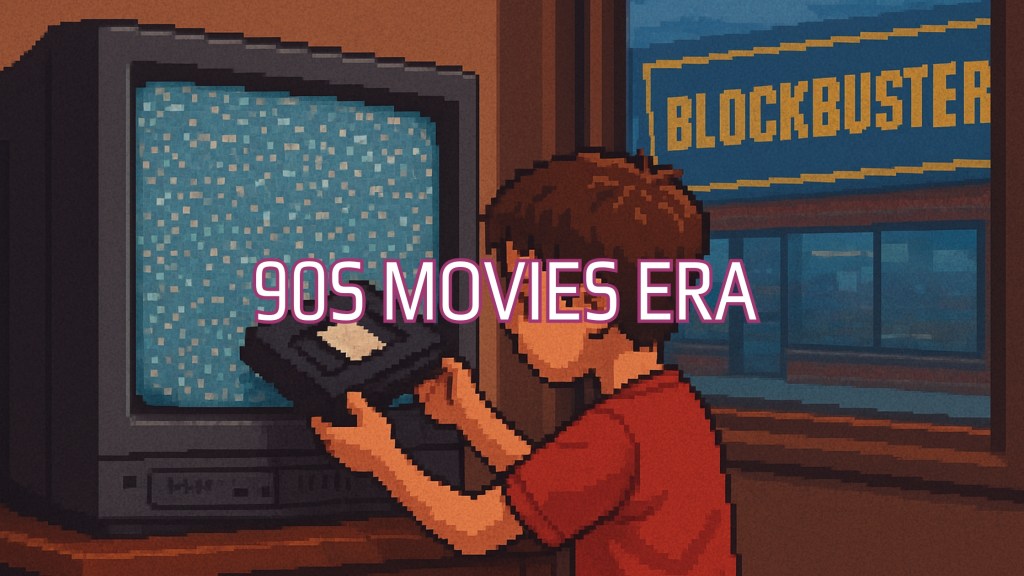
Ready to bust out the flannel, dust off the VHS tapes, and dial back to the decade of dial-up: The 1990s! While today’s cinema is all high-speed edits and eye-searing CGI, there’s a warm, comfortable glow to a classic 90s film that hits different. It was the decade where Gen X angst met blockbuster budgets, and the result was pure, captivating magic.
If you’re looking for a perfect dose of 90s cinema nostalgia, keep reading to find out why these films are simply the best
The Ritual: Friday Night at Blockbuster
“How can we talk about the magic of the 90s without remembering the ultimate Friday ritual, renting a movie? Before streaming erased the anticipation, watching a film meant a full-blown adventure. You’d pile into the car and head to Blockbuster or your local rental shop, wandering the aisles, hunting for that last copy of The Mask, and breathing in that unforgettable cocktail of plastic cases, worn carpet, and popcorn. That whole journey was part of the experience and is something today’s instant-play world can’t replicate.”
That whole journey created a connection that modern movie-watching has simply lost. You’d physically hold the box, study the cover art, and obsessively read the synopsis on the backside. That anticipation and that physical commitment to a selection is a huge part of the 90s charm. When we reminisce about the best 90s movies, the process of renting them is inseparable from the memory itself. It wasn’t just about watching the film; it was about the communal pilgrimage to the store, making the selection, and finally bringing that slice of cinematic joy home.
The VHS Experience: The Ritual Behind Watching Classic 90s Movies
Before streaming changed everything, watching 90s films was a tactile, hands-on adventure, and nothing captures that era better than the VHS experience. Every movie night began with sliding that chunky cassette into the VCR, hearing the mechanical click, and waiting for the soft hum of the tape spinning up. Sometimes you’d get a pleasant surprise, a perfectly clean playback. Other times, you’d be greeted with static lines, warping images, or the dreaded moment of realizing the previous renter didn’t rewind. “Be Kind, Rewind” wasn’t just a slogan; it was a code of honor for movie lovers.
These imperfections are part of what makes 90s cinema nostalgia so powerful today. Tracking issues, soft picture quality, and even the slight fuzziness of worn-out tapes created a warmth that modern digital crispness can’t imitate. The VHS era forced patience, presence, and a real commitment to the movie you picked, rewatching a favorite tape over and over until the image softened into a familiar blur. It’s no wonder these analog quirks helped turn countless films into personal classics long before the internet told us what the “best 90s movies” were supposed to be.
Analog vs. Algorithm: The Lighter Vibe of 90s Cinema
The distinct feel of 90s cinema comes down to more than just the fashion; it’s about the rhythm of the film itself. Today’s blockbusters feel like they are required to clock in at two to three hours, but many classic 90s films knew how to get in, thrill us, and get out! The pacing often felt lighter and more focused. Directors weren’t afraid to let scenes breathe, allowing dialogue and tension to build gradually, which is why thrillers like The Silence of the Lambs feel so deliberate and powerful. Of course, the 90s gave us plenty of tough, intense films, but overall, there was an efficiency to the storytelling that made for fun, digestible viewing, giving these movies a comfortable, re-watchable quality we crave for that easy 90s cinema nostalgia.
The visual difference is huge, too. Compared to today’s hyper-sharp digital productions, a lot of classic 90s films were still shot on 35mm film, giving them a softer, warmer texture. Critically, the decade still relied heavily on practical effects, which are absolutely groundbreaking. Take Jurassic Park, for example. Steven Spielberg used a combination of gigantic, realistic animatronics and just the right amount of CGI, and honestly? Those dinosaurs still look and feel more real than some effects in movies released last year! Before CGI took over everything, this mix of tangible puppets and high-tech touches gave films a lasting, physical reality that holds up better than many modern all-digital spectacles.
The Golden Icons: Stars Who Ruled the Box Office
The 90s minted stars whose names alone guaranteed a trip to the box office, making their movies some of the best 90s movies to watch today. These actors weren’t just famous; they were cultural institutions who defined the successful genres of the decade. They had star power that demanded attention, cementing the golden era of 90s cinema nostalgia.
These icons had the unique charisma to anchor any film, whether it was a heartfelt drama or a massive summer action flick. Here are a few of the biggest names that ruled 90s cinema:
- Tom Hanks: The Everyman Champion (e.g., Forrest Gump, Apollo 13)
- Julia Roberts: The Rom-Com Queen (e.g., Pretty Woman, Notting Hill)
- Will Smith: The Summer Blockbuster King (e.g., Independence Day, Men in Black)
- Keanu Reeves: Action/Sci-Fi Cool (e.g., Speed, The Matrix)
The Unpolished Edge: A Safe Zone for Storytelling
Let’s talk about the decade’s unique dialogue and tone. The 90s existed in a fantastic, brief window where mainstream storytelling felt less self-conscious and less filtered than today. This freedom allowed for unpretentious comedy. Think about films like Dumb and Dumber or Ace Ventura; the humor was often outrageous, silly, and played for pure, chaotic laughs. Many jokes simply wouldn’t make it into a modern script because cultural sensitivities have evolved and that’s okay! But it’s part of the simple fun of revisiting these classic 90s films; they were just playing for laughs, full stop.
It’s why we get a little nostalgic twinge when we see those modern “advisory” notices pop up before some older movies. While we understand that certain dialogue and themes reflect different times, these films captured characters that were often authentically messy and rough around the edges. This unpolished charm is exactly what makes these movies feel so true to the era and such a comforting gateway back to the time we remember. If you’re craving some pure, uncomplicated 90s cinema nostalgia, look no further than these defining titles that offer a simpler, more straightforward kind of fun.
Now, tell me, what film were you always fighting for the last copy of at Blockbuster on a Friday night? Mine was Rush Hour, without a doubt!
When Movies Made Music: The Soundtrack Era of 90s Cinema
Another defining part of classic 90s movies was their soundtracks, an era when films didn’t just tell stories; they launched songs, shaped genres, and dominated the radio. This was the decade when a movie soundtrack could become as iconic as the film itself. Think of Titanic’s sweeping ballads, Space Jam’s energy, the alt-rock punch of Empire Records, or the smooth R&B and pop that made The Bodyguard one of the best-selling soundtracks of all time.
These soundtracks were cultural events. You walked out of a theater wanting the CD or cassette immediately, and those songs became the emotional afterglow of the movie you just experienced. The perfect track could elevate a scene from memorable to unforgettable, and for many of the best 90s movies, the music is what keeps them living rent-free in our nostalgia-loving minds. Today, revisiting these films feels a bit like dusting off an old mixtape,you don’t just remember the visuals, you remember the feeling.
The Final Rewind: Our 90s Charm Keeps Playing
Whether it was the tactile thrill of renting a tape at Blockbuster, the groundbreaking magic of Jurassic Park‘s effects, or the pure, simple joy of those unpretentious comedies, the classic 90s films offer something modern cinema often misses. They are our perfect ticket back to a time of flannel, flip phones, and genuine cinematic comfort. The 90s weren’t just a decade, they were a vibe, and their movies will forever be the VHS tape we never stop rewinding.


 Topazzi World
Leave a comment